This incident exposes the fragility of executive protection, the unpredictability of risk, and why most traditional corporate audits fail to truly safeguard executives, operations, and critical secrets.
What Happened: The Anatomy of a Near-Catastrophe
At 8:34 p.m. on April 25, 2026, the White House Correspondents’ Dinner at the Washington Hilton turned from ceremony to crisis in seconds. Cole Tomas Allen, a 31-year-old mechanical engineering graduate and part-time tutor from Torrance, California, rushed past a magnetometer checkpoint. Armed with a shotgun, handgun, and knives, he opened fire, wounded a Secret Service agent, and forced the rapid evacuation of President Trump, the First Lady, Vice President Vance, and senior cabinet members.
The most provocative truth is not the attacker’s weapons, but his banal unpredictability. Allen was not a known radical or trained operative. He was an educated American who gained legitimate access as a hotel guest and acted with lethal intent when opportunity presented itself.
Having spent my entire career in dignitary protection, high-stakes risk management, and cybersecurity — including years as a protectee myself — I have seen how even the most robust systems can reveal their fragility under pressure. This incident is a stark case study in the silent erosion of perimeter discipline and the inherent fragility of executive protection in the modern world.
The Exploit
Allen exploited the narrow intersection of legitimate access, human performance limits, and momentary gaps in screening. He moved with focused determination and penetrated deep into the venue before being stopped. The active phase of the breach lasted roughly 25 seconds.
This was not a sophisticated multi-stage operation. It was one motivated individual testing the weakest links in one of the world’s most elite protective systems — and nearly succeeding.
The Unpredictability of Risk
Risk is not a tidy statistical distribution. It is chaotic, opportunistic, and frequently emerges from sources that conventional models fail to anticipate. Allen’s outwardly unremarkable profile demonstrates how threats can arise from individuals who would pass most standard risk assessments and background checks.
In corporate environments, this unpredictability is magnified. Grievances can fester undetected. Third-party tools can silently expand blast radius. Compromised accounts can behave normally until the moment of exploitation. Most risk assessments and audits, anchored in historical data and point-in-time snapshots, systematically underestimate this human and dynamic dimension.
Perimeter Defense: The Dangerous Illusion
The physical breach maps directly onto cyber realities. Legitimate access becomes the entry vector. Determination often defeats sophistication. Human factors — fatigue, alert overload, and cognitive bias — create exploitable gaps in identity systems and privileged access controls.
Modern enterprises no longer operate with clear perimeters. Hybrid cloud, remote workforces, and complex ecosystems have rendered the traditional castle-and-moat model obsolete. Organizations that continue to rely primarily on static perimeter defenses or periodic audits are defending territory that no longer exists in its assumed form.
The Fragility of Executive Protection
High-concentration events like the Correspondents’ Dinner create asymmetric targets for attack. Corporate executives represent equivalent concentrations of risk through their authority, digital identities, and visibility. A successful compromise here produces consequences far beyond the initial breach: operational paralysis, reputational damage, regulatory scrutiny, and loss of stakeholder trust.
Insider threats intensify this fragility because they originate from within the perimeter. Protecting executives and the sensitive secrets they steward requires more than additional layers — it demands continuous behavioral intelligence and ruthless operational discipline.
The fragility of executive protection stems not primarily from external sophistication, but from the quiet erosion of operational discipline and overreliance on static audits. True resilience demands that leaders treat risk as inherently unpredictable and protection as a continuous, adaptive discipline rather than a recurring compliance exercise.
Toward Adaptive Resilience: Moving Beyond Compliance Theater
Periodic audits provide baseline assurance, but they are inadequate against unpredictable risk. Genuine protection requires a more rigorous approach:
- Assume breach as doctrine and engineer for rapid containment.
- Enforce zero-trust access with recurring, evidence-based validation.
- Deploy behavioral analytics tuned to actual organizational behavior.
- Conduct integrated red teaming that simulates unpredictable adversarial intent.
- Establish board-level governance demanding proof of sustained control effectiveness over time.
Three Critical Facts
- The breach unfolded in approximately 25 seconds, revealing how rapidly focused intent can exploit momentary gaps in elite screening.
- The attacker gained legitimate initial access as a registered hotel guest, highlighting the persistent difficulty of distinguishing benign presence from hostile intent.
- Even elite protective details depended on body armor to prevent a fatality, proving that no single control layer is infallible.
“When operational discipline erodes silently, even the strongest defenses reveal their fragility. Risk does not respect our assumptions.”
Why Most Audits Fail to Protect What Matters
Audits Measure Existence, Not Effectiveness
Traditional audits are excellent at confirming that policies and controls exist on paper at a specific point in time. However, they rarely detect the slow erosion of operational discipline, alert fatigue, or the subtle behavioral signals that often precede a breach.
The Dangerous Gap Between Compliance and Real Resilience
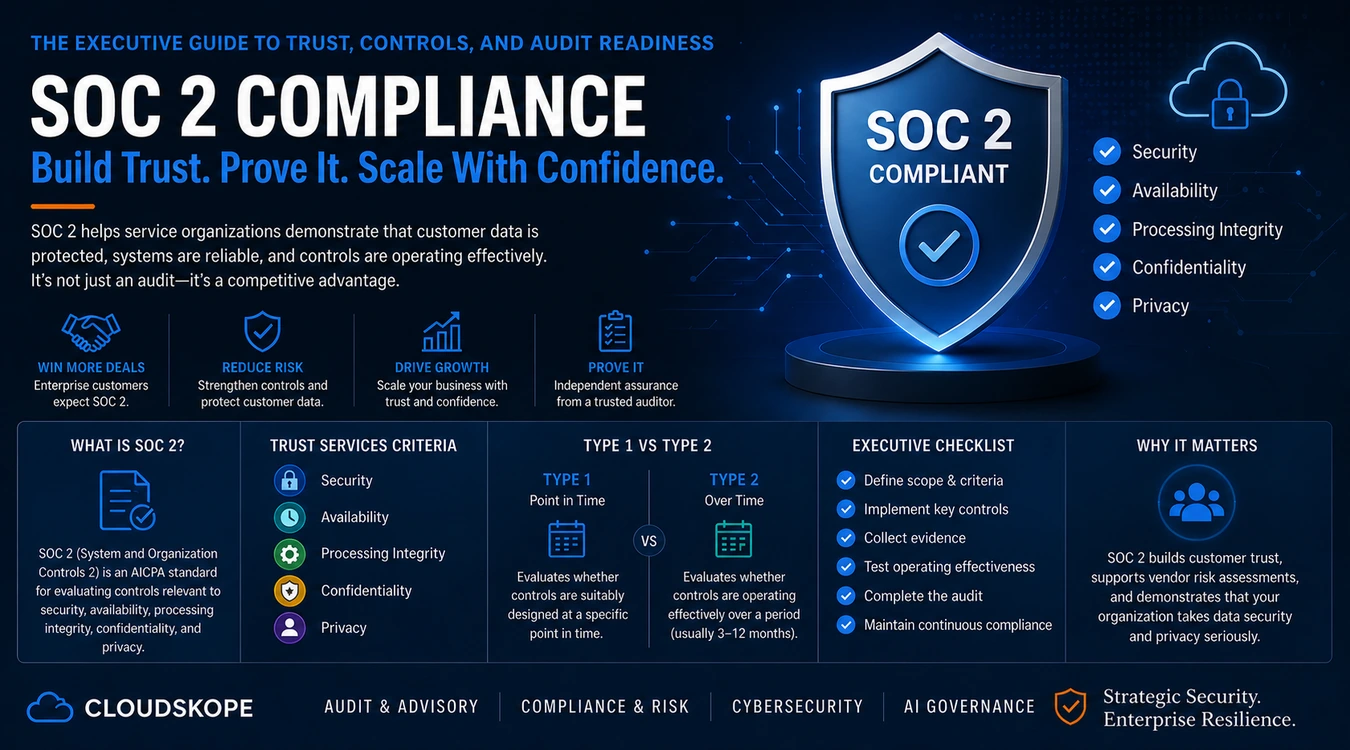
Many damaging breaches in recent years occurred in organizations that had recently passed formal audits. This reveals a structural weakness: most audits focus on design and existence rather than sustained operational effectiveness under real-world stress and against motivated human adversaries.
Audits Frequently Undervalue Secret Protection
Once initial access is gained, the blast radius expands rapidly. Intellectual property, customer data, strategic plans, and executive communications can be compromised in minutes. Traditional audits seldom evaluate detection speed, containment capability, or the practical ability to protect sensitive secrets when the perimeter is already breached.
A Sobering Real-World Parallel
The White House Correspondents’ Dinner incident makes this painfully clear. Even with elite resources and real-time monitoring, a single determined actor nearly succeeded in under 30 seconds. Corporate environments — with far greater complexity and fewer resources — are significantly more vulnerable when relying on conventional audit approaches.
CloudSkope’s Approach Delivers What Traditional Audits Cannot
At CloudSkope, we go far beyond standard audits. Our Cyber Risk & Control Assessments combine deep technical analysis, behavioral intelligence, and operational testing to deliver ground-truth visibility and actionable remediation. We don’t just check boxes — we identify hidden gaps in access governance, insider threat detection, executive protection, and secret safeguarding before they become incidents.
Related Reading
The White House Correspondents’ Dinner breach exposes a hard truth: risk is unpredictable, perimeters erode quietly, and traditional audits often provide false confidence. The fragility of executive protection is real — and it threatens not only individuals but the organizations and secrets they are entrusted to defend. Addressing it requires intellectual honesty and a far more rigorous approach than conventional compliance.
At CloudSkope, we reject superficial compliance theater. We deliver the deep, continuous risk and control assessments that high-stakes enterprises actually need to strengthen executive protection, reduce insider threats, and safeguard critical secrets. The incident at the Correspondents’ Dinner proves that even elite systems can falter. Don’t wait to discover the fragility of your own protections the hard way. Ready to move beyond traditional audits to genuine resilience? Schedule a confidential Cyber Risk & Control Assessment with CloudSkope. We identify hidden gaps and build lasting protection — before the next unpredictable event forces the issue.